

 JOIN and enjoy exclusive benefits!



Lisbon's shopping scene: LX Factory, Chiado, and the artisan workshops that don't appear in the guidebooks
15/10/2026What fits in a suitcase when Lisbon becomes a showcase? If you are looking for what to buy in Lisbon, aim beyond the standard magnet: tiles, ceramics, canned goods, ginjinha, textiles, Portuguese cosmetics, and local design. The key is to choose pieces with history, origin, and personality, from Chiado to LX Factory and small workshops where the hand of the creator is still recognizable.
What to buy in Lisbon: typical products to take home
There are souvenirs that you forget when you unpack, and others that continue to tell the story of the trip at home. In Lisbon, gastronomy, traditional crafts, and Portuguese design offer good clues to choose wisely. The origin, quality, and ease of transport help you decide what comes with you.

Portuguese flavors as gifts: canned goods, ginjinha, wines, and sweets
Canned fish is a practical purchase: sardines, tuna, or mackerel take up little space, travel well, and are one of the typical Portuguese products easiest to transport.
If you are looking for a flavor especially linked to Lisbon, ginjinha plays at home. This cherry liqueur is part of the city's gastronomic culture. Tasting it before buying a bottle helps you know if that souvenir will also satisfy the palate.
Portuguese wines are another option for those who prefer a pantry souvenir. Pastéis de nata require more care: if you have a long journey, enjoying them freshly made in Lisbon is safer than trusting the puff pastry to several hours inside a suitcase.
Tiles, ceramics, and cork products made in Portugal
Tiles, tableware, bowls, and small decorative pieces are part of a ceramic tradition that remains present in Portuguese design. Checking the origin and finish helps distinguish a piece with identity from a mass-produced souvenir.
Tiles are also part of the urban heritage, just like the Portuguese cobblestones that map out Lisbon's streets and squares. For antique pieces, provenance is especially important: prioritize new tiles, reproductions, or current artisanal work and ask about the origin if a piece appears historic.
Cork offers a lightweight alternative strongly linked to Portugal. It is used in bags, wallets, footwear, accessories, and small decorative items. For traveling, a piece of cork makes things much easier than a full set of tableware.
Cosmetics, textiles, and design objects with local identity
- The famous towels are only part of the Portuguese textile tradition. Garments, blankets, and household items expand the options; among the characteristic materials is burel, a fabric made with wool and also used in fashion and decoration.
- Soaps, creams, and perfumes take up little space and are easy to give as gifts. Looking at the brand, the manufacturer, and the place of production helps to verify if the product is truly linked to Portugal, especially in areas with a high presence of tourist shops.
- Books, illustrations, stationery, fashion, and small designer objects steer the purchase toward the most creative side of Lisbon.
Shopping in Lisbon: Chiado, LX Factory, and workshops with their own craft
Lisbon changes its showcase depending on the street. The center preserves historic shops; Alcântara transforms industrial past into creativity; and some workshops bring the shopping closer to the artisanal process.
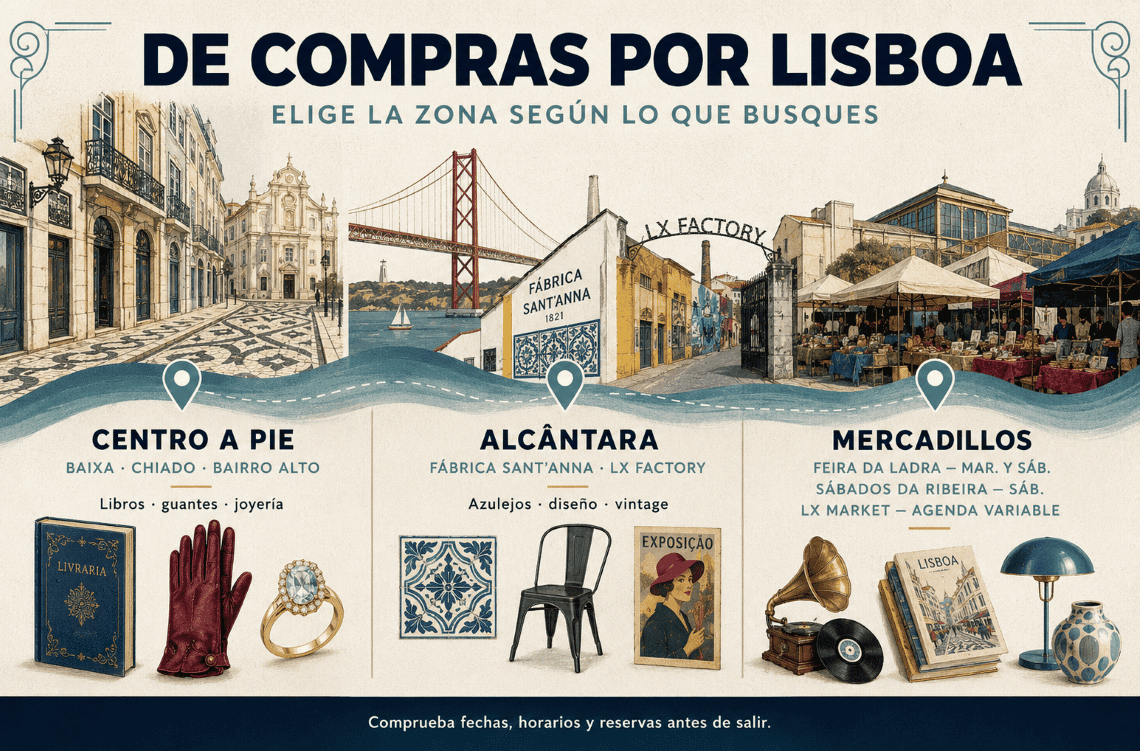
Choosing the area by the type of piece you are looking for saves backtracking and leaves more time to browse at your own pace:
| Area | What to look for | Shopping profile |
|---|---|---|
| Chiado and Baixa | Books, gloves, jewelry, textiles, and Portuguese products | Historic trade and specialized shops |
| LX Factory, Alcântara | Fashion, vintage, illustration, accessories, and independent design | Contemporary creation and small brands |
| Bairro Alto and Alcântara | Designer jewelry, tiles, and ceramics | Pieces directly linked to the craft |
Chiado and Baixa: historic shops, books, and pieces with personality
Chiado is one of the great commercial and cultural axes of Lisbon. Rua Garrett concentrates bookstores, shops, and cafes in a route that naturally connects with Rua do Carmo and Baixa, creating a comfortable route to combine historic trade and current establishments.
- On Rua Garrett, Livraria Bertrand opened in 1732 and is considered the oldest operating bookstore in the world. Buying a book here adds to the reading a history that began almost three centuries before your getaway.
- On Rua do Carmo, Luvaria Ulisses has preserved a very specific craft since 1925: leather gloves for men and women, fitted to the customer and partially made in a nearby workshop. Its small display window concentrates exactly the opposite of a generic store: specialization, craftsmanship, and a piece designed to last.
Bairro Alto and Alcântara: workshops where the craft is still alive
In some shops in Lisbon, the purchase begins before the display window: you can get close to the work of those who design, restore, or manufacture the pieces.
- In Bairro Alto, craftsmanship has names and surnames; the Atelier Leitão & Irmão gathers jewelers and designers dedicated to personalized creation, modification, and restoration of jewelry and goldsmith pieces. It was born in 1822 and opened its Lisbon workshops in this neighborhood in 1889. Today, they remain the heart of their manufacture, where master goldsmiths and jewelers work on personalized creation, restoration, and limited-edition pieces.
The atelier is at Travessa da Espera, 8-14, between the streets of Bairro Alto. Here design and manual work share the same workbench: an especially interesting option if you are looking for Portuguese jewelry linked to a craft with more than two centuries of history.
- In Alcântara, the Fábrica de Sant’Anna maintains a ceramic tradition dating back to 1741. At Calçada da Boa Hora, 96, they continue working with tiles and earthenware using artisanal techniques. Factory visits require prior reservation.
LX Factory Lisbon: independent design, vintage, and creativity
In Alcântara, next to the 25 de Abril Bridge, LX Factory occupies an old industrial complex whose origin dates back to 1846, when the Companhia de Fiação e Tecidos Lisbonense was installed there. Its old warehouses today bring together fashion, art, architecture, restaurants, bookstores, and projects linked to Lisbon's industrial heritage.
- For shopping, the fun lies in combining permanent stores with small designer projects. Fashion, accessories, illustration, books, decoration, and design objects coexist with murals and elements of the manufacturing past, so the walk is quite an open-air creative showcase.
- On weekends, LX Market adds stalls from artists, designers, artisans, and vintage sellers. Its participation criteria prioritize original proposals and limit the resale of mass-produced items. It is a good tip for looking for jewelry, illustration, clothing, second-hand items, and pieces from small creators.
Street markets in Lisbon: what to look for and what to know before buying
If you enjoy digging through stalls until you find something that wasn't taking up half the airplane cabin, Lisbon has markets with quite different profiles. Antiques, second-hand items, designer goods, books, and crafts lead to different stops:
- Feira da Ladra, for antiques and second-hand: in Campo de Santa Clara, it gathers clothing, books, records, decorative objects, collectibles, and pieces from different eras. The Feira da Ladra is held on Tuesdays and Saturdays, from 9:00 AM to 6:00 PM. It is best to go with time here: part of the appeal lies precisely in searching through stalls until you find something interesting.
- LX Market, for design and vintage: complements the permanent stores of LX Factory with small creators, crafts, and second-hand items. It is of special interest if you want to gather independent design and a market in the same stop, without repeating a second route through Alcântara. Its programming may change depending on the time of year.
- Sábados da Ribeira, for crafts, art, and books: the Mercado da Ribeira hosts an appointment on Saturdays with antiques, local creation, and designer objects. The Sábados da Ribeira currently have hours from 10:00 AM to 7:00 PM and free admission.
If you want to combine several areas in the same day, the Lisbon tourist bus can come in as support for travel around the city, without turning your shopping tour into a succession of walking trips.
Start your shopping route from the center of Lisbon
After filling your bag with ceramics, books, or some piece that wasn't in the plan (those are the dangerous ones), it's time to think about where to leave the purchases. If you are still deciding what to buy in Lisbon, from our hotel you can tour Chiado and Baixa on foot and save another time for Alcântara, LX Factory, or the markets that tempt you the most.
At Casual Belle Époque Lisboa, we await you at Rua da Madalena 125, in the heart of the historic center, very close to Baixa Pombalina and Praça do Comércio.
When you return after a day of showcases, workshops, and finds, we provide the place to drop your bags and rest. As for managing to close your suitcase, that remains between you and the zipper.
Frequently asked questions about Lisbon
These answers resolve practical questions that may arise before preparing your route of shops, workshops, and street markets:
What typical items can be bought in Lisbon?
Among the most representative purchases are Portuguese ceramics and tiles, canned goods, ginjinha, wines, cork products, textiles, and traditional cosmetics. For an easy-to-transport gift, choose soaps, illustrations, or a beautiful tin; tableware requires serious negotiation with suitcase space.
What is LX Factory?
LX Factory is a creative complex in Alcântara installed in an old industrial area whose origin dates back to 1846. On its streets with a manufacturing aesthetic, you will find design shops, fashion, urban art, workshops, restaurants, and the Ler Devagar bookstore. It is at Rua Rodrigues de Faria, 103, under the 25 de Abril Bridge.
Where to buy tiles in Lisbon?
Prioritize workshops, active factories, and specialized shops that can explain the origin of each piece. Fábrica de Sant’Anna, on Calçada da Boa Hora, preserves artisanal techniques and receives visits by prior reservation. In markets and antique shops, avoid historic tiles without accredited provenance: they could have been illegally removed from Lisbon buildings.
Is it recommended to visit LX Factory Lisbon?
Yes, especially if you are interested in independent design, urban art, and reclaimed industrial spaces. You can spend a few hours exploring its shops, going into Ler Devagar, and eating in the area. If you are visiting Lisbon for a few days, decide between this creative facet of Alcântara and the historic neighborhoods you still have pending.
How to get to LX Factory from the center of Lisbon?
From Praça da Figueira or Cais do Sodré you can head toward Alcântara on tram 15E and complete the last stretch on foot. There are also Carris buses that connect the center with the area. Use Rua Rodrigues de Faria, 103, as your destination and check the service for that day due to possible route changes.
Do you have to buy tickets to visit LX Factory?
General access to the site is free, so you can walk through its streets and enter the shops without buying a ticket. You will only pay for your purchases, food/drink, or activities with their own fees. If you are going for a specific market, concert, or exhibition, check the agenda before traveling to avoid a visit with the soundtrack of crickets.
What can be bought cheaply in Lisbon?
Among the most affordable options are canned goods, soaps, designer postcards, small cork objects, and used books. Feira da Ladra offers second-hand items and antiques, while creative markets gather illustrations and accessories from small producers. Compare quality and provenance: a bargain loses its charm when it lasts less than the return flight.