

 JOIN and enjoy exclusive benefits!



What to eat in Athens: from the Psiri taverns to the best souvlaki in the city
09/11/2026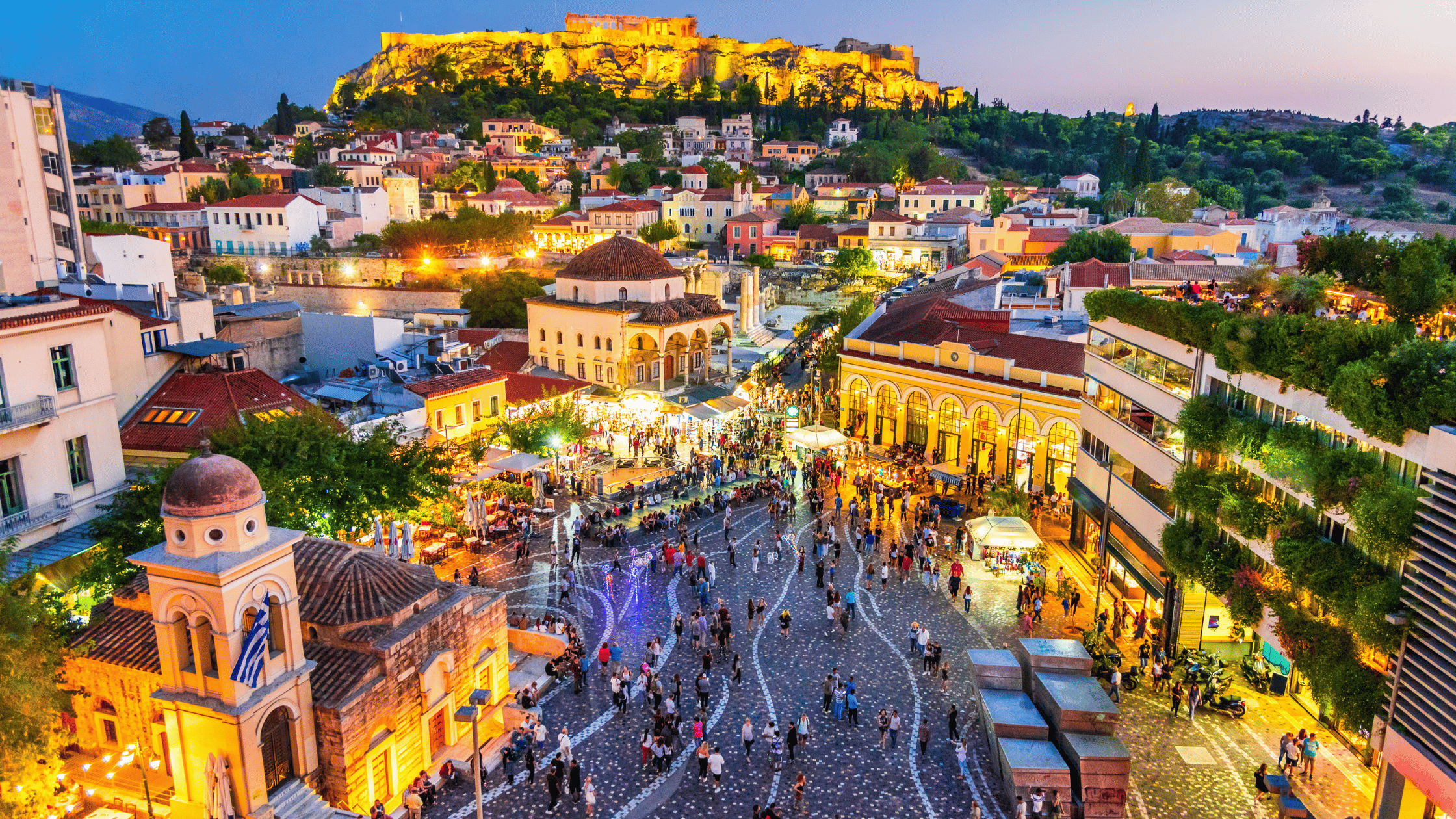
Where to start when Athens is served on so many plates? Here, every neighborhood changes the angle: Psiri smells of the grill, Monastiraki calls for warm pita, and Varvakios puts the market on the table. If you are looking for where to eat in Athens, get ready to look at the city from a different perspective and discover souvlaki, gyros, and taverns with character without getting lost in so much gastronomic variety.
What to eat in Athens: Greek dishes you have to try
Athenian gastronomy is best understood when you turn the menu into a small map of flavors. There is grilled food, tavern recipes, dishes to share, and sweets capable of sparking a suspicious "just one more." Start with the classics that help you recognize Greek cuisine and save some appetite to improvise.
Souvlaki and gyros: how to distinguish them without getting confused by the menu
Both can arrive wrapped in pita with tomato, onion, and sauce, so there is an explanation for the confusion. The main difference lies in how the meat is prepared before serving.
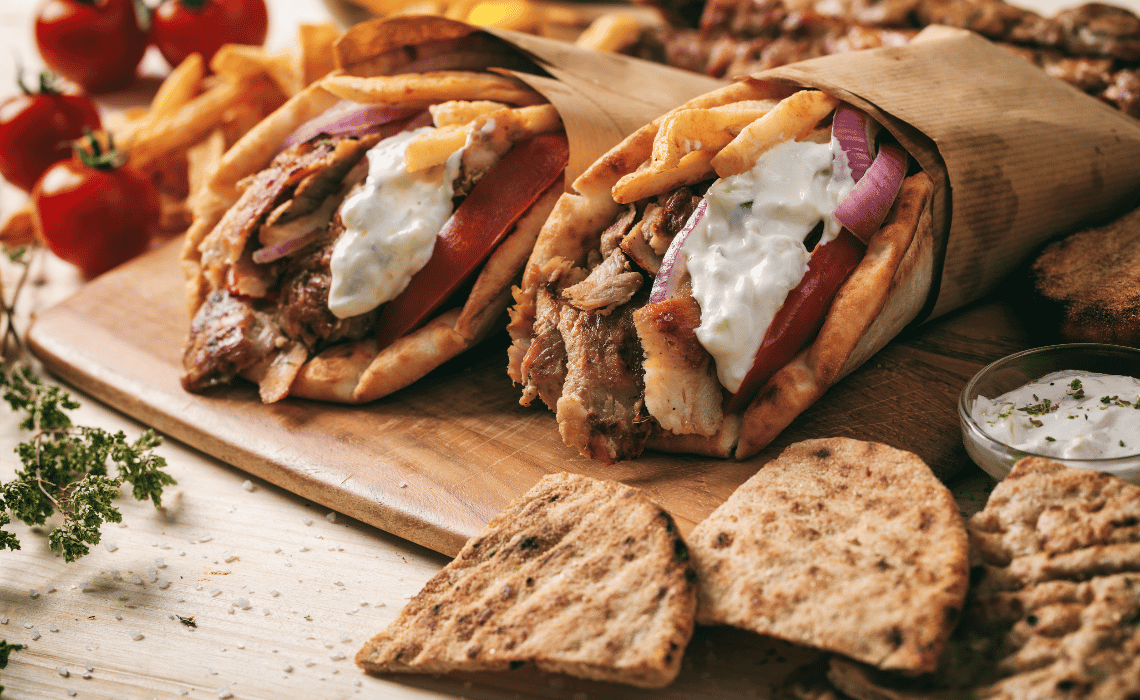
In traditional souvlaki, pieces of meat are skewered and cooked on the grill. In Athens, you will also find the term kalamaki to order the skewer. Gyros is prepared on a vertical rotisserie and sliced thinly as it browns.
| Feature | Souvlaki | Gyros |
|---|---|---|
| How it's cooked | skewered pieces of meat roasted on the grill | meat cooked on a vertical rotisserie |
| How it's served | on a skewer, on a plate, or inside a pita | inside a pita or served on a plate |
| Type of cut | skewered pieces of meat | slices cut from the rotisserie |
| What to order | kalamaki if you are looking for the skewer | pita gyros if you prefer meat cut from the rotisserie |
The pita indicates the presentation, not the cooking method. That is why you can find a pita with souvlaki and another with gyros without them being the same dish.
Moussaka, meze, and other classics to complete the table
Souvlaki grabs a lot of the spotlight, but a tavern uncovers another perspective of Greek cuisine. Vegetables, cheeses, olive oil, herbs, and recipes to share make up the rest of the canvas. A table with several small dishes brings together different flavors without turning the meal into a Homeric odyssey:
- Moussaka: layers of eggplant and minced meat covered with béchamel and baked. It is a hearty dish to eat sitting down.
- Meze: small preparations to share, such as tzatziki, fava, dolmadakia, meatballs, or saganaki cheese.
- Horiatiki: Greek salad with tomato, cucumber, onion, olives, feta, oregano, and olive oil.
- Spanakopita and tiropita: pieces of phyllo dough filled with spinach and cheese, or just cheese, respectively. They are common in bakeries and practical for breakfast or snacking while walking.
- Dolmadakia: vine leaves stuffed with rice, onion, and herbs, served as a starter or as part of a meze table.
- Baklava and loukoumades: the former combines thin layers of dough, nuts, and syrup; the latter are small fried dough balls accompanied by honey, cinnamon, or other toppings.
These flavors are part of the traditional dishes of Greece and the meze culture in Athenian gastronomy. For a first meal, combine a meze, a horiatiki, and a hot dish in the center: various angles of Athens brought together at a single table.
Where to eat in Athens: Psiri, Monastiraki, and the Central Market
In Athens, choosing where to eat is also choosing the scene. You can go from a tavern hidden among the alleys of Psiri to a freshly made pita in Monastiraki and end up among spices, cheeses, and cured meats next to the market. These three areas show different faces of Athenian cuisine without leaving the historic center.
Psiri: taverns, meze, and Greek cuisine with character
Psiri mixes workshops, street art, bars, and taverns with tables tucked into small streets. Here, you feel like sitting down calmly, ordering several dishes for the center, and letting the food mark the route. To try traditional cuisine, there are addresses with very different personalities:
- Avli: behind a door covered in graffiti, there is a small courtyard with tables and a short menu of homemade Greek dishes. Avli's hidden courtyard in Psiri has that secret corner feel that fits an informal dinner.
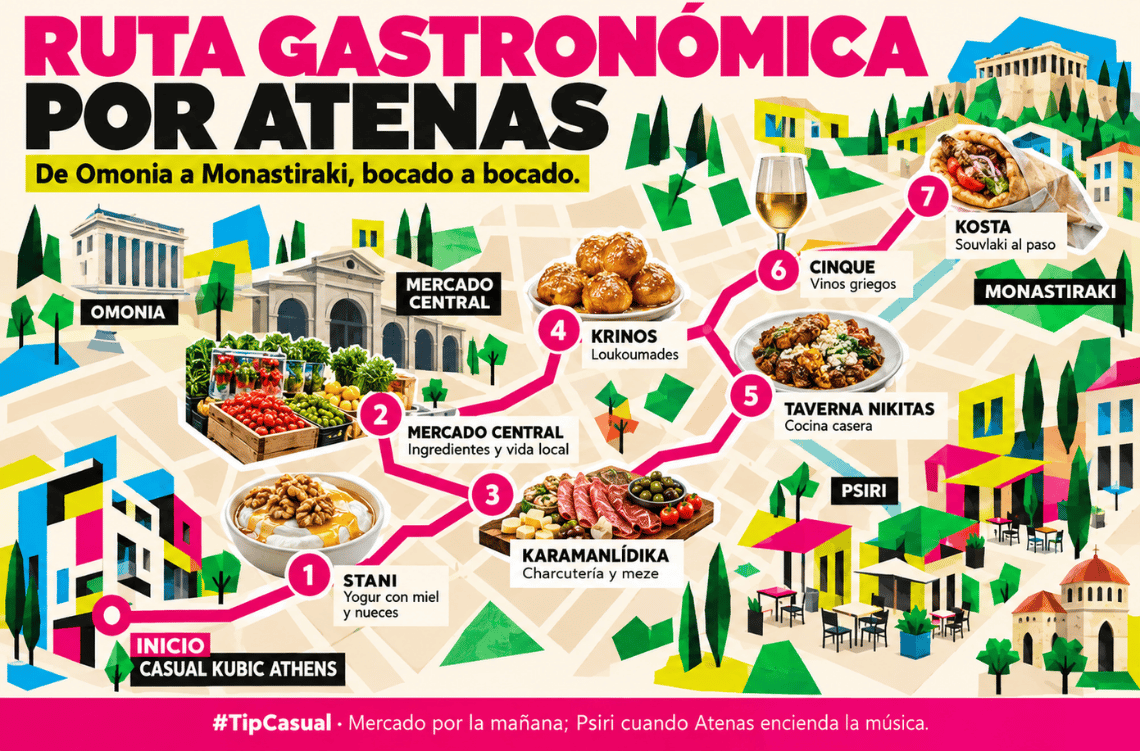
- Nikitas: this family-run tavern on Agion Anargyron focuses on homemade Greek cuisine. Among the specialties highlighted by its visitors are moussaka, tzatziki, and lemon veal. A simple corner to sit down to eat without too much ceremony.
- Klimataria: traditional Greek cuisine and music are part of the experience. Its lively atmosphere makes it an option for those who want to accompany their lunch or dinner with a more festive touch.
Sharing several mezes lets you try more recipes without turning dinner into a collection of main courses. Afterward, Psiri provides the rest: alleys, terraces, and that casual vibe that invites you to prolong the after-dinner conversation.
Monastiraki: souvlaki, kebab, and street food
In Monastiraki, the plan changes perspective. The grill takes center stage, and a hot pita can solve lunch between markets, squares, and monuments. Here, it is important to know what to order to distinguish the skewer from the kebab and the gyros.
Two names are enough to guide you:
- Kosta (Agias Irinis): this small shop in Agias Irinis Square focuses on souvlaki and pita in a direct and affordable format. You might find a queue during busy hours, so it is better to go without too much hurry.
- O Thanasis: next to Monastiraki, kebab is one of the house's great protagonists. It also prepares pork, veal, or chicken souvlaki, as well as starters like tzatziki and Greek salad.
Here it is useful to remember what we learned before: souvlaki, gyros, and kebab describe different preparations, even if they share pita, grills, and accompaniments. Checking one more word on the menu can save you a small gastronomic crisis.
If the walk continues toward Plaka, you will find more taverns and terraces around Adrianou and the streets near the Acropolis. It is better to leave that area as an extension of the tour and keep the focus here on Psiri and Monastiraki.
Central Market of Athens: Varvakios and the flavors of Evripidou
The Central Market of Varvakios teaches Athenian cuisine before it reaches the plate. Among its stalls, you will find meats, fish, and other products that are part of the city's day-to-day life.
The experience continues along Evripidou and its specialized shops, where aromas of spices, herbs, nuts, cheeses, olives, and sausages mingle. It is one of those walks where the sense of smell begins to organize the itinerary before the map.
Two stops complete the gastronomic route well:
- Karamanlídika: near Evripidou, it combines a gastronomic shop and a traditional meze table. Sausages, cheeses from small producers, and pastirma made according to the Karamanlid tradition are part of its offering. It is a good stop to try at the table some of the products you have seen earlier in the market shops.
- Diporto: this old basement tavern maintains a simple atmosphere and a kitchen based on traditional dishes. The tavern experience next to Varvakios offers a contrast to the more current proposals in the center.
Varvakios deserves more than a quick photo among the stalls. The market, Evripidou, and the nearby eateries show the ingredients, shops, and recipes as parts of the same puzzle. After walking through them, many words on the menus of Psiri and Monastiraki begin to make sense.
Tips for eating well and cheaply in Athens from breakfast to dinner
Do you need an Olympus budget to eat well in the Greek capital? Luckily, no. A bakery in the morning, street food at noon, and a tavern to share dishes can make for a complete gastronomic day. The key is to choose the type of stop according to your hunger, time, and how much you want to spend:
- To start the day with a Greek flavor: near Omonia, Stani preserves the tradition of old Athenian dairies and serves sheep's milk yogurt, in addition to traditional sweets. If you are into savory breakfast, Ariston and its Greek pies put tiropita kourou, filled with feta, on the table. Coffee, yogurt, or freshly baked dough: you decide how the day begins.
- To eat quickly and keep exploring: near Omonia, Lefteris O Politis serves pita with spiced meat in a simple format designed to be eaten without long breaks. Falafellas offers falafel, hummus, and vegetable alternatives to go. Street food helps adjust the budget without dedicating a long after-dinner time to lunch.
- To share a table in a tavern: Greek salad, fava, dolmadakia, cheeses, and other mezes allow you to try several recipes before adding a hot dish. Atítamos offers traditional Greek cuisine with starters, grilled meats, and other homemade specialties. Ask about portion sizes before ordering: sharing well is also knowing when to stop.
- To make a sweet stop: loukoumades have their own plan. At Krinos, on Aiolou Street, these small fried dough balls maintain their traditional version. You can also find bougatsa, a dough and cream preparation linked to the Greek breakfast. If you are on the "dessert goes to another stomach" team, Athens seems to agree with you quite a bit.
- To book a treat at night: the selection of Athens restaurants in the MICHELIN Guide also opens the door to higher-budget proposals. The Zillers Rooftop Gastronomy and Spondi are two options for dedicating a night to a special gastronomic experience.
Thus, eating cheaply in Athens depends more on how you organize your day than on giving up local cuisine. Alternate simple breakfast, street food, and shared dishes, and leave plans with views or signature cuisine for when you feel like changing your perspective.
Casual Kubic Athens: another perspective to savor Athens
After touring markets, grills, and taverns, the gastronomic puzzle is now complete. Only one piece is missing: a base from which to leave with a hunger for the city and return when the body asks for a break. In Omonoia, a short walk from the center, Casual Kubic Athens mixes geometric lines, avant-garde design, and a breakfast buffet to start another day with energy.
Leave your suitcase, explore Athens at your own pace, and change your perspective at every corner. Today could be souvlaki in Monastiraki; tomorrow, yogurt with honey and a coffee before exploring the city of Athena. When the last loukoumas has disappeared from the plate (mysteriously, of course), your cubist universe will be waiting for you.
Valid for all hotels
Up to 15% discount.
Join the BeCasual club for free and get a 15% discount from your first booking + €5 welcome gift, access to exclusive promotions, and euros that can be accumulated for future stays. Check the current terms and conditions on the official website.
Join BeCasualFrequently asked questions about where to eat in Athens
How much does it cost to eat in Athens per person?
The budget changes significantly depending on the type of stop. As a reference, a souvlaki can start at around €3, while a three-course meal in a mid-range restaurant starts at around €30. Bakeries and street food help reduce spending; rooftops and gastronomic restaurants increase it.
Can you pay by card in taverns and restaurants in Athens?
Yes. Major credit/debit cards are widely accepted in Athens, although some establishments may not accept certain networks. Carrying some cash is still practical for small expenses or issues with the payment terminal, especially when buying in markets or very small establishments.
What vegetarian and vegan options are there to eat in Athens?
Greek taverns offer quite a few meat-free alternatives, such as ladera, gemista, vegetables, legumes, and some phyllo dough pies. You will also find restaurants and places specialized in plant-based cuisine. If you follow a vegan diet, always check the ingredients: feta, tzatziki, and some doughs or fillings contain dairy.
Where to eat near the Acropolis without spending too much?
Plaka and Monastiraki concentrate taverns, terraces, and takeout options a short distance from the Acropolis. Efcharis, on Adrianou, offers traditional Greek cuisine near Monastiraki. If you want to control your budget, check the menu before sitting down and compare table options with pitas and other takeout formats.
Note: This guide is updated with information collected in October 2026. The offer is dynamic and the hours, prices, or policies of places change frequently. Before going, always verify the current status on social media or official websites.