Casual’s Thinking Corner
Here, we don’t beat around the bush: we say what we think and dream what we say. No filters, no excuses.
In this space, we’ll share everything that excites us: news that will surprise you, insights that will make you think and thoughts that will make you smile. From the latest hotel trends to the stories hidden behind our doors, you’ll find a little bit of everything here.
So, if you’re ready for a journey without a map—join us!

Dog-friendly route through Valencia: a day of parks, cafes and beach with your dog
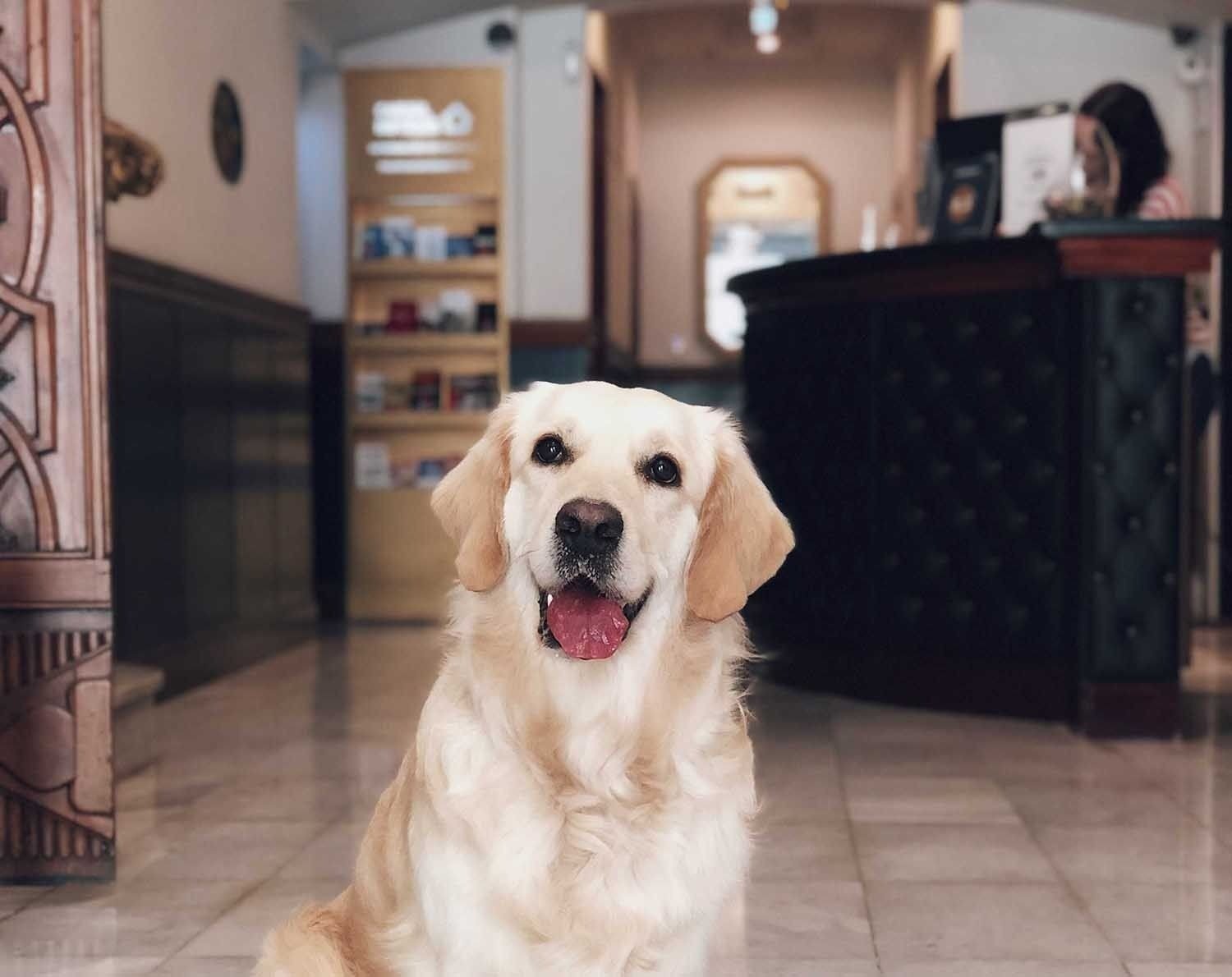
There are plans that you know your dog is going to love even before you leave the house. Just grabbing the leash is enough: ears up, tail in propeller mode, and that "come on, we're late" look.
If you are looking for a plan to walk around Valencia with your dog, this dog-friendly route combines green areas, neighborhoods with terraces, and even a closing stop by the sea. You can complete it in a full day or split it into two if you prefer to take your time, avoid the hottest hours, or adapt the walk to your dog's pace.
The trick is to choose the sections well: walk through the Turia Garden, make urban stops in comfortable neighborhoods, and reserve Pinedo beach as a flexible ending, rather than an obligatory trek from the city center.
A day in Valencia with your dog: paw print by paw print
Valencia works very well for a getaway with a dog because it combines long green areas, walkable neighborhoods, and open spaces near the sea. Even so, it is wise to plan the route in sections, especially if it is hot or if your dog is not used to walking for many hours.
The most convenient part can be done on foot between the Turia Garden, the city center, and neighborhoods like Ruzafa or El Carmen. Pinedo beach, on the other hand, fits better as an afternoon closing if you can travel there comfortably, without turning the walk into a marathon of tired paws.
Map of the route in one day
The plan follows a simple logic:
- Early start passing through El Carmen, exploring a bit of the historic center.
- Moving forward through green sections connected to the Turia Garden.
- A break in El Carmen or Ruzafa, depending on the pace of the walk.
- Flexible ending in other parks or Pinedo beach.
Estimated time: the urban route with parks, breaks, and lunch can take up a large part of the day. If you add Pinedo, think of a full day, starting early and avoiding the hottest hours, or split it into two days so your dog can also enjoy the plan.
#CasualTip: Don't just calculate the walking time. On a route with a dog, you have to add rests, water, shade, playtime, food, and travel. That extra buffer is what makes the journey enjoyable rather than a marathon on a leash.
Arriving through El Carmen to wander the streets and take the first break
If you start from the downtown area, a great idea can be to walk through El Carmen until you reach the river. El Carmen is handy for swapping historic streets, small squares, and facades with urban art for the greenery of the great walk that awaits us.
It is one of the most recognizable neighborhoods in Valencia's old town: here you will find the Serranos Towers and the Quart Towers, ancient medieval gates of the city, as well as the CCCC, a cultural center housed in a former 13th-century convent.
For this route, there is no need to see it all. The key is to use El Carmen as an urban break: walk a little, take photos, look for shade, and choose a comfortable spot before moving on. It is highly enjoyable if at any point during the route we want to return to El Carmen.
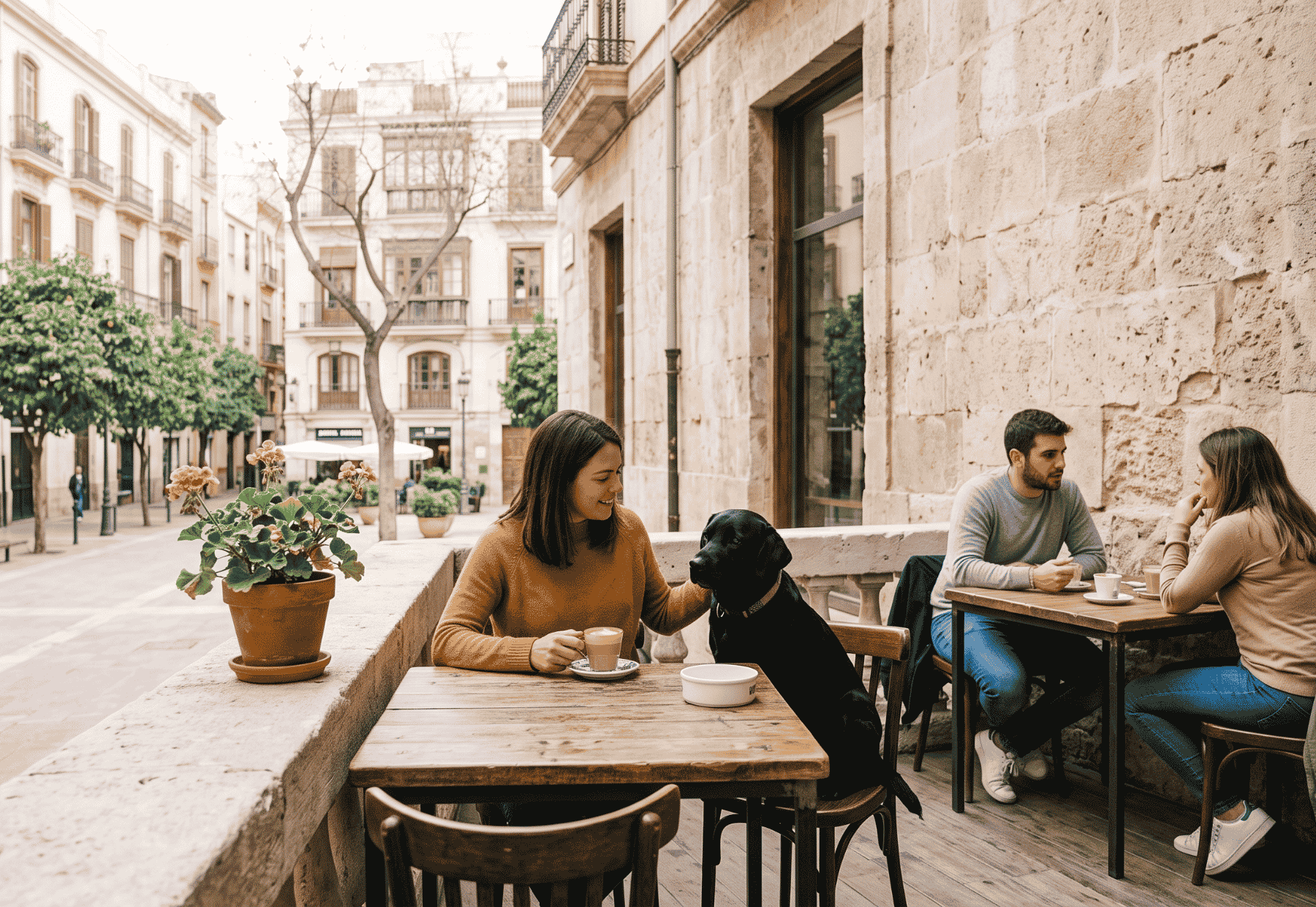
Before sitting down, confirm that they still accept dogs and that they have enough space for your route companion to rest without getting in the way of passersby. In El Carmen, it is best to take a proper break, not over-walk: the neighborhood has a great atmosphere, but with a dog, it is best enjoyed by seeking out quiet terraces and avoiding the loudest hours.Starting the day at the Turia Garden
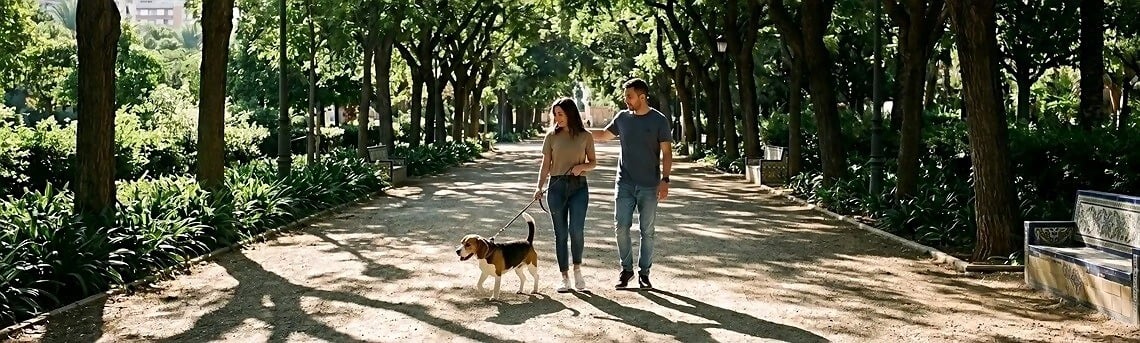
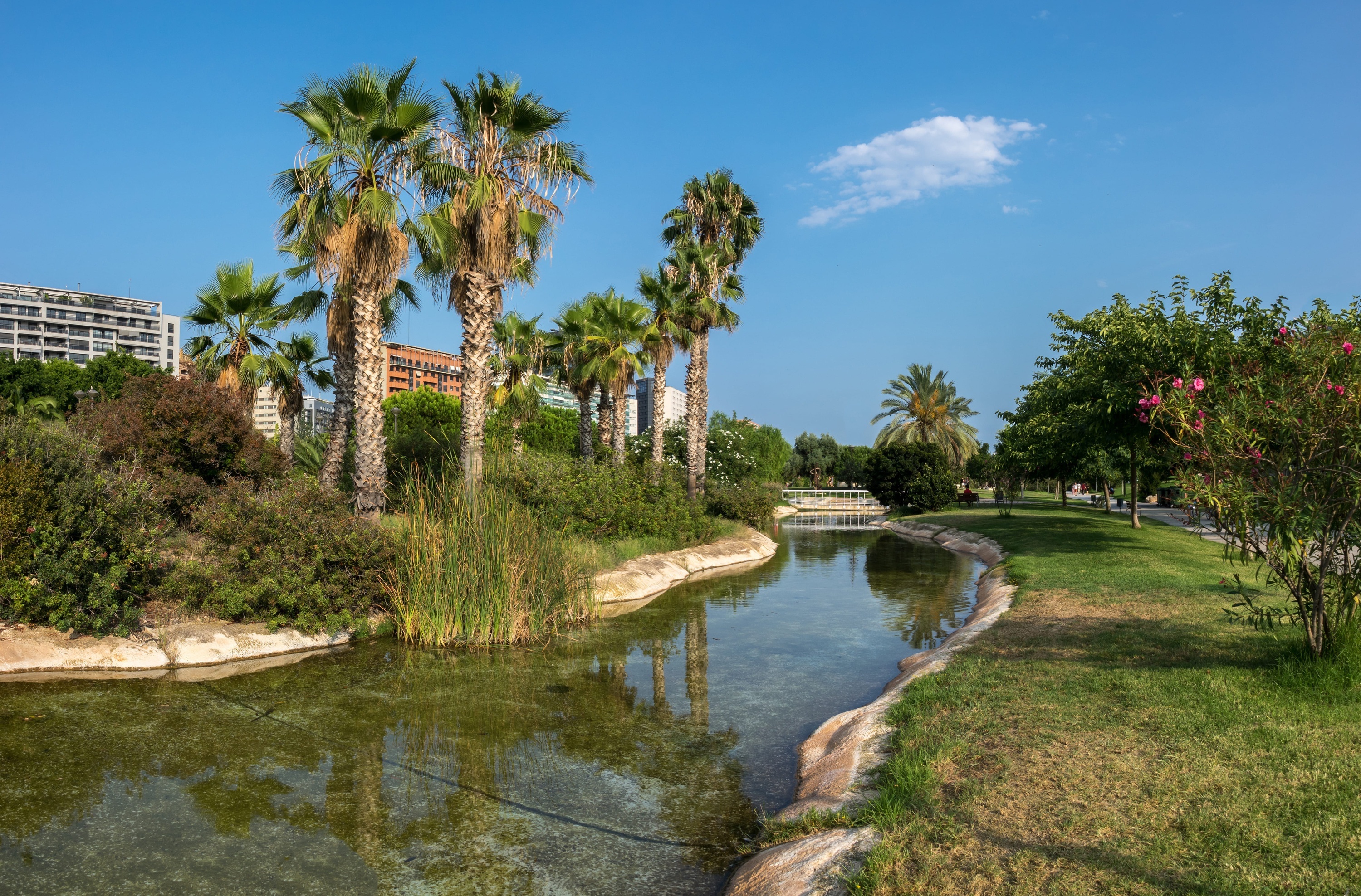
The Turia Garden is one of the best places to start a route with a dog in Valencia. It occupies the old riverbed and crosses the city as a large green corridor of more than 9 km if you want to complete it entirely. It is a park where dogs must be kept on a leash, but it is spacious enough for them to have their own space and enjoyment.
When you walk with your dog, you notice this quickly: there are fewer crossings, more space to walk, and areas to stop without interrupting the stroll.
If your dog gets agitated around bikes, runners, or scooters, avoid the busiest hours and stick to the sides of the garden. The route remains comfortable, but much quieter.
The ideal approach is to start early, when the park is quieter and the ground hasn't accumulated as much heat yet. Near the Pont de Les Arts, there is an Agility Circuit (Section IV) useful for giving your dog a first moment of play before continuing the route. Along the way, there are 3 dog socialization areas where they can go off-leash (Sections VII Dog Park at Pont del Real, X next to the Palau de la Música, and XI at the height of CaixaForum and El Oceanogràfic), in addition to the aforementioned Agility Circuit (Section IV).
The Turia Garden park or, as the locals call it, "el Parque del Antiguo cauce" (the Old Riverbed Park) or "el río" (the river), encompasses the green lung of Valencia. It is easy to join it from neighborhoods like Ciutat Vella and it is the best way to orient yourself in the city, as it can be accessed from numerous pathways and there are plenty of bridges.
If they still have energy, Parque de Cabecera is one of the best green extensions of the tour. It is integrated into the Turia Garden and adds walking paths, rest areas, picnic tables, a lake, and corners where you can slow down the pace before heading back toward the city.
This park connects to yet another one, La Canaleta. Come on, if you feel like walking through parks, things could easily get out of hand. Our proposal is for you to enjoy it, making it as manageable and pleasant as possible for your pet. You don't have to check off every single point on the route, which is exactly why we leave you some information on dog-friendly terraces so you can escape the park at almost any point.
A change of pace in Ruzafa
The transition to the city comes naturally. After the green section, Ruzafa changes the pulse of the route.
This neighborhood, located south of the center and belonging to the Ensanche district, has that touch of a former independent area that is evident today in its streets with a life of their own: cafes, terraces, restaurants, small shops, and a local atmosphere.
It is a good area to take the long break of the day: have a bite to eat, sit down without rushing, and let your dog rest before deciding if the route ends here or continues a bit further.
#CasualTip: In Ruzafa, the best plan is not to rush to the next stop, but to slow down: choose a comfortable table, hydrate, rest, and decide if the route ends here or if there is still energy left to extend the day.
Although it goes slightly beyond our proposal, at the other end of Ruzafa we have the Parque Central (Central Park), featuring plenty of water areas and more green walks.
Back to the greenery towards Turia River Park, Cabecera, and Central Park
Depending on how far you got in the morning or how much energy is left, after Ruzafa, you can return to the green axis to regain space, shade, and walking rhythm. The Turia River Park maintains that feeling of a wide corridor cutting through Valencia: paths to walk along without so many crossings, areas to stop, and room for your dog to wind down before continuing.
Here it helps to go with a clear idea: take advantage of the dog zone or walk on a leash, without assuming that the entire park works the same way for dogs.
The key is not to do it all, but to choose the section that best fits the day: more shade if it's hot, longer breaks if your dog is already tired, and fewer detours if you want to arrive in Ruzafa with energy.
The sea as a grand finale at Pinedo beach
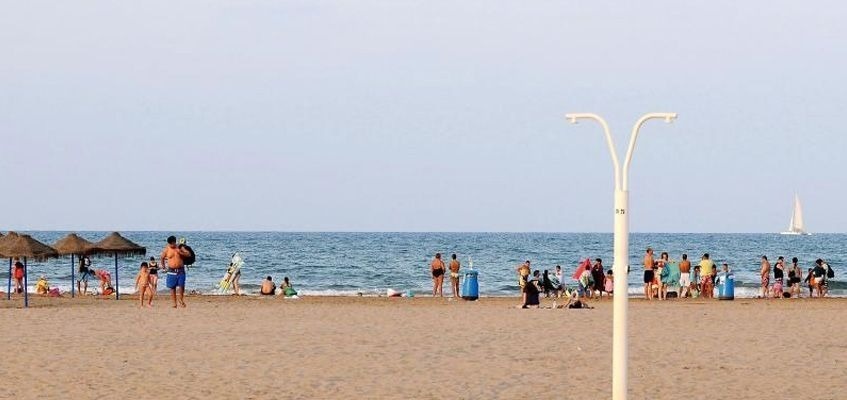
If there is still energy left after the urban route, the dog-friendly beach of Pinedo can be the seaside plan to close out the day. It is an area authorized for dogs in Valencia, wide, sandy, and with views toward the port, but it is best approached as a flexible extension rather than an obligatory stop after walking across half the city.
To enjoy it fully, organize the trip according to the heat, available time, and your dog's energy. In high season, the wisest thing to do is to avoid the middle hours of the day, bring water, check that the sand isn't burning, and verify the access conditions beforehand, because the dog area may operate under specific dates, schedules, and regulations.
Once there, the route changes its rhythm: fewer streets, more sand, and a calmer ending by the sea.
Keep your dog's documentation up to date, respect the marked area, and keep them under control at all times. Pinedo is worth it if you arrive with time to spare, not if it feels like a final effort after an excessively long route.
How to get around Valencia with your dog without disrupting the plan
Getting around efficiently prevents the day from being cut short halfway through. In Valencia, the urban part of this route is best enjoyed on foot, as it allows you to link green areas, neighborhoods, and breaks without relying so heavily on public transport.
#CasualTip: For longer stretches, it is advisable to check the conditions beforehand based on the size of the dog, the carrier, and the type of transport.
What you can do and what to avoid during the route
During the tour, there are situations where the environment sets the limit:
- Urban areas require keeping the dog under control at all times.
- Urban beaches have restrictions outside of designated authorized areas.
- Public transport operates under specific conditions depending on size and format.
Adapting to each space keeps the plan smooth and uninterrupted.
How to travel around Valencia with a dog
The metro can restrict your plans if you travel with a dog. Access is limited to small animals under 15 kg, always in a carrier and with the EMT Mascota card, which requires prior paperwork and carries a cost. Assistance dogs can also travel.
#CasualTip: Walking allows you to better link the Turia Garden, the neighborhoods, and the breaks along the route, without worrying about access conditions on each section.
Where to sleep to start the route seamlessly
When the day ends, with sand on their paws and that calm that remains after having explored the city, there is one decision that influences everything that comes next.
Choosing the right place to sleep makes the route start before you even leave.
In Valencia, staying near the Turia Garden or in central areas makes it easy to move around on foot from the very first moment. The route maintains its logic uninterrupted, with parks, neighborhoods, and the coast connected to each other.
There are more and more pet-friendly hotels, but when there is true passion for furry friends, it shows.
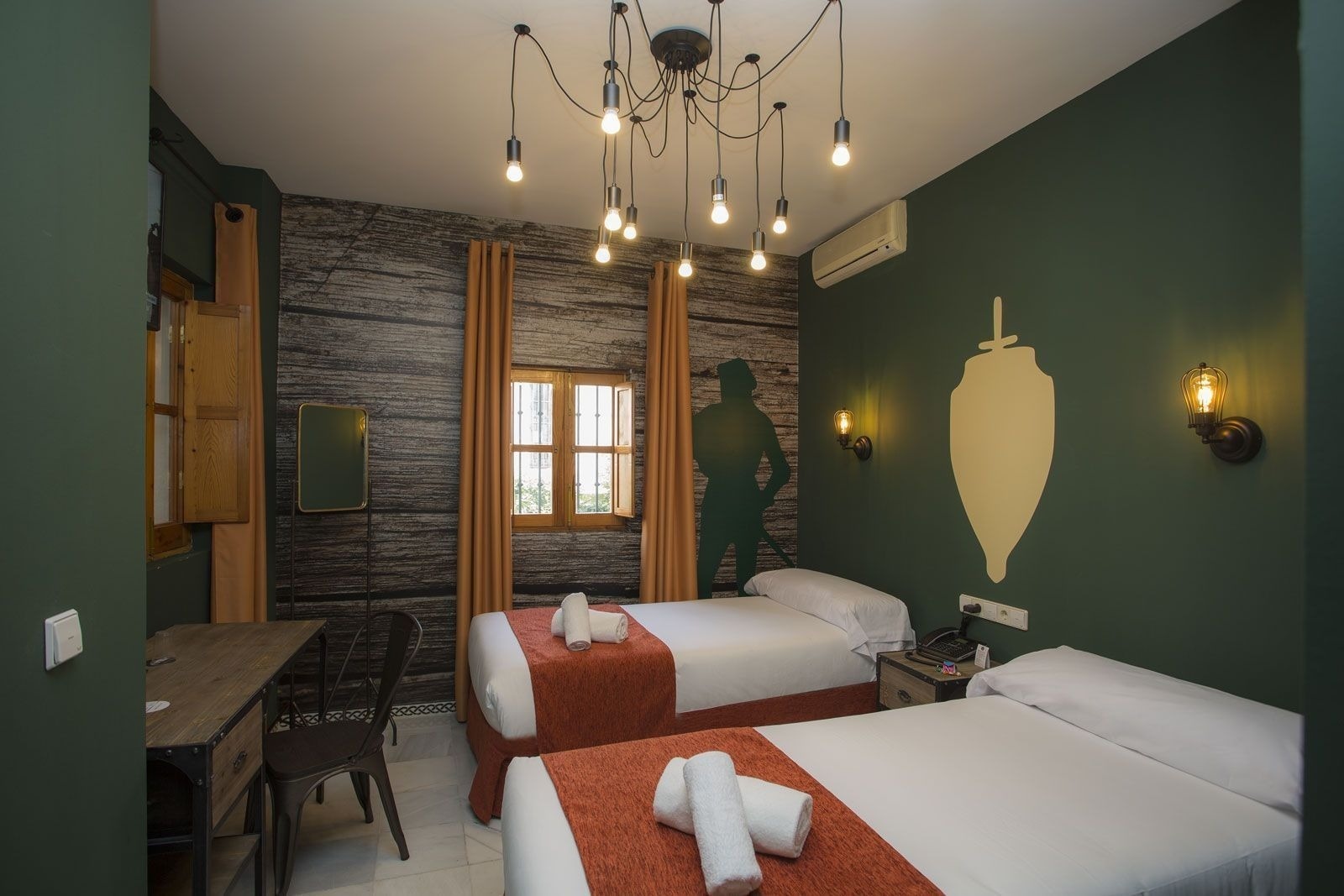
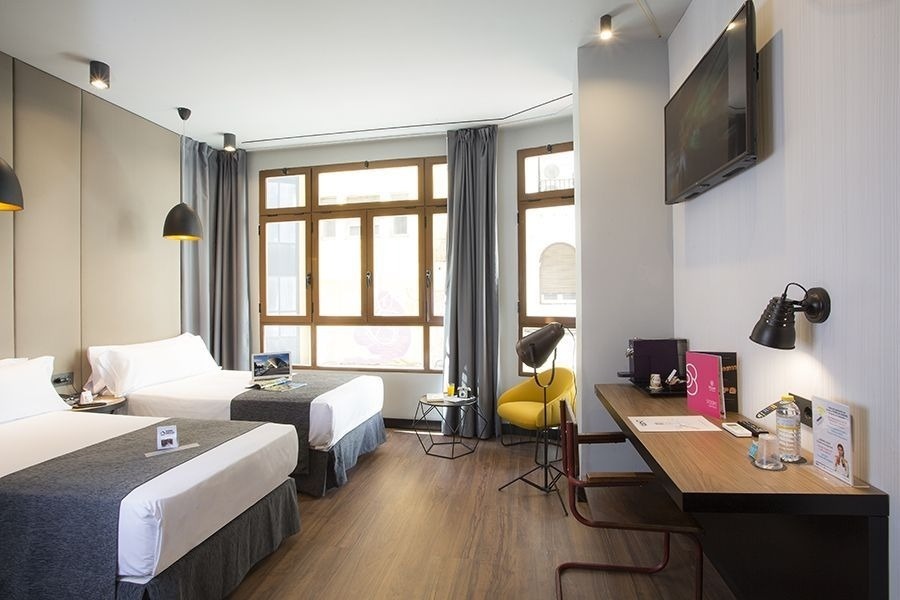
Options like Casual Vintage, Casual del Cine or Casual Socarrat are located right in Ciutat Vella, at points where the plan fits perfectly from the start. You step out onto the street and you're already on the route.
Casual Natura or Casual de las Civilizaciones connect with green areas and urban parks, expanding the walk without changing its dynamics.
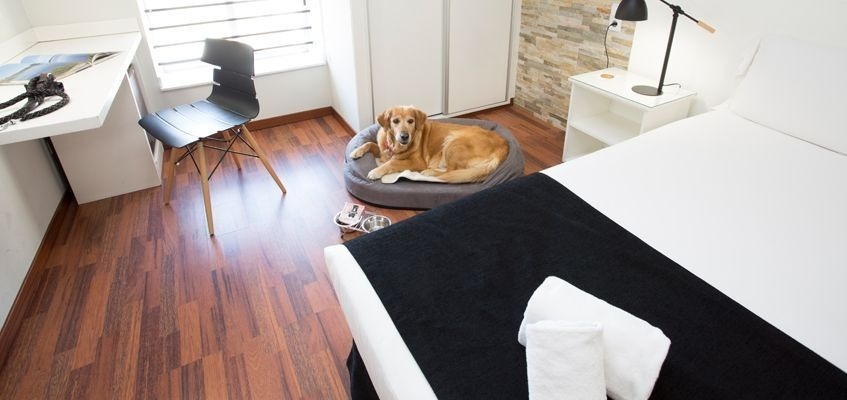
Beyond the location, there is something else that adds comfort to the trip. At all Casual hotels, pets up to 25 kg (under 7 kg if it's Casual Natura) get a free little bed to rest, their own canine dining set with food and water bowls included, and a welcome snack to start off on the right foot. Or rather, the right paw.
When the accommodation fits, the day doesn't start when you go out.
It starts before.
Options that fit within the route
The bus allows for occasional trips under specific conditions, mostly with small dogs in carriers. It serves as a support at specific moments, without the need to depend on it for the entire route.
When the plan is well mapped out, most of the route is completed by walking.
Basic keys to keep everything flowing during the day
There are small details that sustain the route from start to finish. Bring water, bags, a comfortable leash, and some snacks if your dog usually needs breaks. If you plan to stop at a terrace, a light blanket can also help them rest without being uncomfortable on the ground.
On hot days, prioritize shade and rests over completing every single point on the route. The best route is not the one that hits the most places, but the one that allows you to enjoy it without your dog winding up exhausted.
Regulations and coexistence in shared spaces
Law 7/2023 reinforces the idea of responsible ownership and coexistence, but on an urban route, that translates into very specific gestures: keeping the dog controlled, respecting restricted areas, avoiding risky situations, and adapting the walk to their needs.
#CasualTip: Not all spaces work the same way. Parks, transport, terraces, and beaches can have their own conditions. Reviewing them before leaving avoids interruptions and makes the plan more comfortable for everyone.
Adjusting the plan according to the day and environment
The route works best when adapted to the day. If it's hot, it's best to start early and save the sections with the most shade for the middle of the day. If it rains, you can reduce park and beach time, and anchor the plan in neighborhoods with more options for indoor breaks.
If your dog is not used to walking a lot, divide the route into two blocks: a green morning and a quiet afternoon.
Route on hot or rainy days
#CasualTip: On hot days, the most recommended option is to do the Turia Garden in the morning and avoid asphalt, sand, and long walks at midday. Paws also feel the temperature of the ground, so it is best to prioritize shade, breaks, and water.
If it rains, Ruzafa and El Carmen can work as an urban alternative, but with realistic expectations: the plan becomes more of a short walk, coffee, and a break rather than a long route. In that case, Pinedo can be saved for another time.
Areas to stop without leaving the route
Ruzafa asks you to stop for lunch or coffee almost without warning: lively streets, a neighborhood vibe, and several pet-friendly spots to slow down the pace a bit. Around the area, you can check out places like Chick Shack, Circo Burger or Matoque, which fit well if you want to take a break without straying too far from the route.
El Carmen is in a different league, with small squares, historic streets, graffiti, and short walks that bring you back downtown without looking too closely at the map. For a stop in this area, you can keep on your radar Mestizo, Brunch Corner - La Virgen or La Fábrica de Huellas, places to eat, have a drink, or take a break with your dog.
In the Turia, the break is simpler and more dog-centric: shade, a bench, water, and keeping on when energy returns. If the walk takes you toward Viveros or the City of Arts area, you can also consider Somos Raro, between the old Turia riverbed and Viveros, or the Aqua Shopping Center if you need a more practical stop.
#CasualTip: Before sitting down, always confirm if they accept dogs, if there is enough space, and if the conditions are still in place. On an urban route, preventive breaks extend the day and make the walk much more enjoyable.
Options if you want to extend the route
If you have more time, you can extend the plan toward more natural environments like Pinedo, El Saler, the Valencian orchard (huerta), or the Albufera. Mind you, it's better to think of them as a separate outing rather than an improvised addition at the end of the day.
They require more travel, more planning, and a prior review of access points, rules, and conditions for going with a dog.
In the case of Pinedo, keep in mind that the dog beach usually operates during the summer season and with specific hours. Before going, check dates, access, documentation, and current regulations to avoid surprises. The beach deserves more than arriving in a rush after a long urban route.
#CasualTip: If the idea is a relaxed getaway, you can do urban Valencia one day and reserve the second day for the beach, nature, or a long walk outside the center.
Valencia with a dog, hassle-free
Valencia has its own way of being explored. Scale, climate, and spaces that connect effortlessly.
When the route works, the plan changes. Fewer decisions. More walking. More shared time. Valencia sets the stage. And your dog already knew how the day was going to end the moment they saw the leash.
Summary of the route in one day
The plan fits best when organized by sections. The urban route can be done walking, but it should be adapted to the heat, available time, and your dog's energy.
Route paw by paw
- Walk through the historic route in El Carmen.
- Great walk in the Turia Garden.
- Passing through Ruzafa to eat, rest, or have a drink.
- Flexible afternoon according to the pace of the day.
- Green section toward Turia River Park, Parque de Cabecera, and Central Park.
- Optional extension to dog beaches, always checking the season, schedules, and access conditions.
Key areas of the route
- El Carmen as a historic and urban break.
- Turia Garden as the main axis.
- Parque de Cabecera, Turia River Park, and Central Park as an extended green section.
- Ruzafa as a pet-friendly gastronomic break.
- Dog beaches as a flexible seaside plan, only if current conditions allow it.
Recommended time
The urban route with parks, breaks, and lunch can occupy a large part of the day. If you add the beach, think of a full day or leave that plan as an alternative for another day.
Sources consulted
To build this route, real urban usage criteria, current regulations, and official Valencia services have been taken into account:
- Law 7/2023 on the protection of animal rights and welfare.
- Metrovalencia, conditions of access with animals.
- EMT Valencia, regulations for traveling with pets.
- Municipal regulations and use of public spaces in Valencia.
- Information on dog beaches and authorized spaces on the Valencian coast.
- Review of urban parks, green areas, and dog zones in the city.
- Law 7/2023, of March 28, on the Protection of animal rights and welfare.
- Law 2/2023, of March 13, of the Generalitat, on the Protection, Welfare and Ownership of companion animals and other animal welfare measures.
- Law 50/1999, of December 23, on the Legal Regime for the Ownership of Potentially Dangerous Animals.
- Real Decree 287/2002, of March 22, developing Law 50/1999.
- Municipal Ordinance on Animal Ownership.
- Municipal Ordinance on Parks and Gardens.
- Municipal Ordinance on Protection against Noise Pollution.
- Municipal Ordinance on Urban Cleanliness.
In addition, practical factors such as hours of use, weather conditions, urban environment behavior, and real experience touring with a dog have been considered to ensure that the route works in practice and not just on paper.
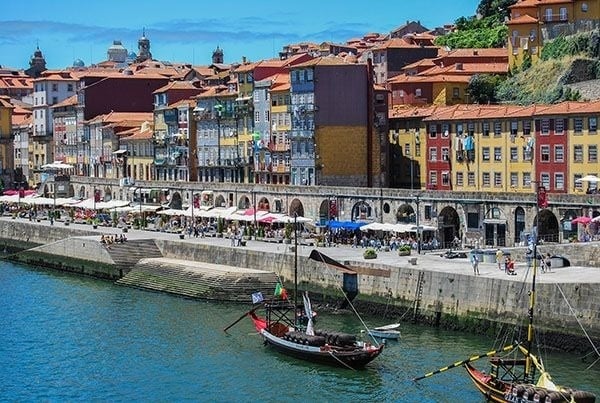
Lisbon, a beautiful city from head to toe
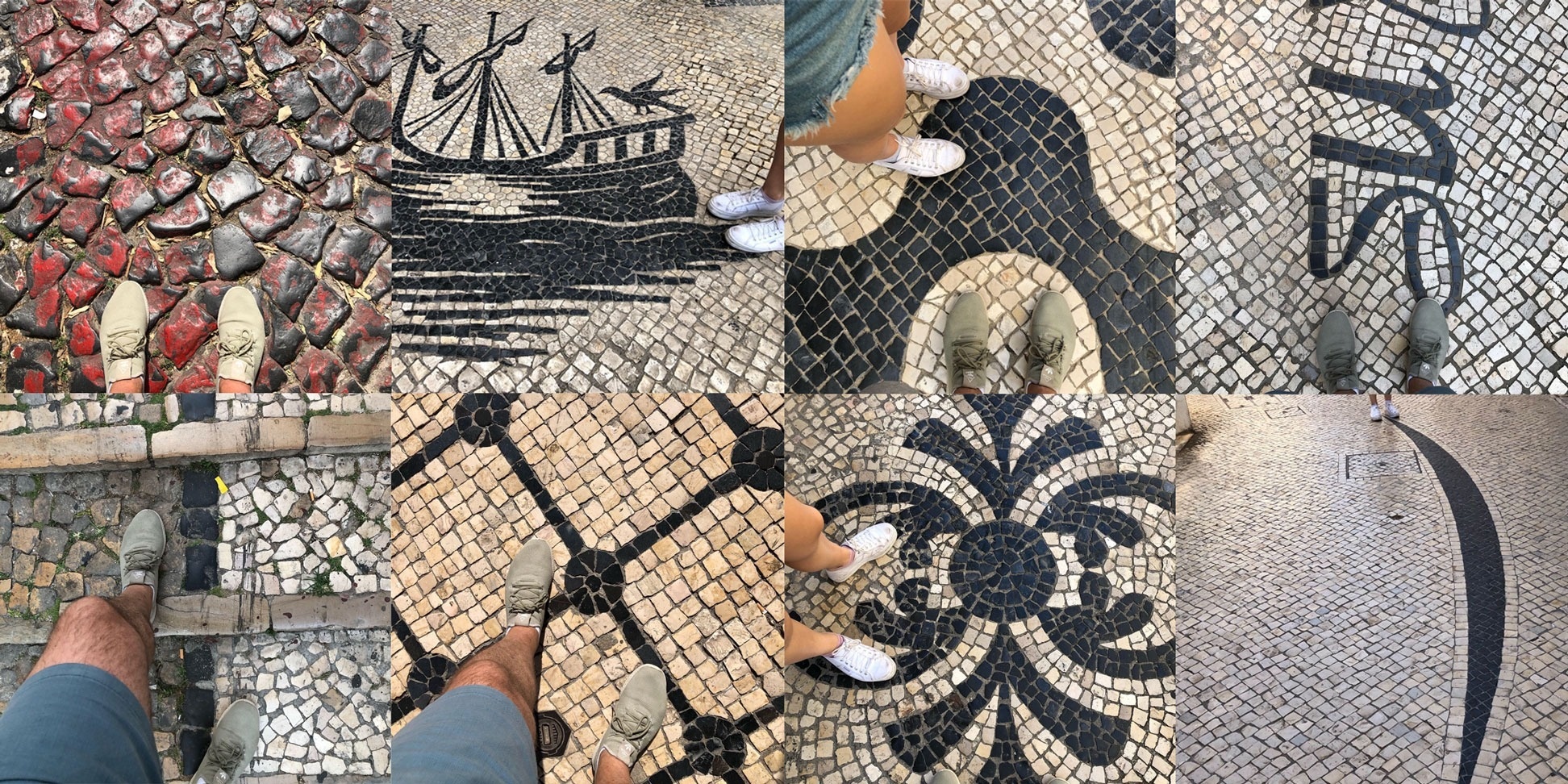
These stone floors, one of the most emblematic jewels of the Portuguese capital, have become an inescapable attraction for those lucky enough to walk on them.
The Portuguese cobblestone, known as "calçada portuguesa", is an art in itself. Made of irregular stones, usually limestone or basalt, they are meticulously arranged to form intricate decorative patterns and patterns.
This type of paving has its roots in the 15th and 16th centuries, but it was the devastating earthquake of 1755 that marked a turning point in its history. The city was left in ruins and the Portuguese cobblestone technique, due to its complexity and cost, fell into disuse during the arduous stage of reconstruction. However, like a phoenix rising from the ashes, the Portuguese cobblestone found its redemption in the 19th century, specifically in 1842.
The push to revive this ancient tradition was led by Lieutenant General Eusébio Pinheiro Furtado, who led prisoners in paving work under his command as Governor of Arms of São Jorge Castle.
What started as a simple zig-zag path turned into something unusual and revolutionary for the time. Praça do Rossio was one of the first areas to experience the renaissance of this art, and quickly its popularity spread throughout the city and beyond, even conquering the Portuguese colonies.
It is important to recognize the work of the "calceteiros", as the artists and pavers who carry out this meticulous task are known in Portuguese. His dedication and ability to bring intricate designs to life deserved a tribute, and this is how in 2006 a monument to the "calceteiro" was erected in front of the church of San Nicolás, on Rua da Vitória in Lisbon. This monument is an eternal reminder of his talent and contribution to the cultural identity of Lisbon.
Book your stay: Casual Belle Epoque Lisbon .
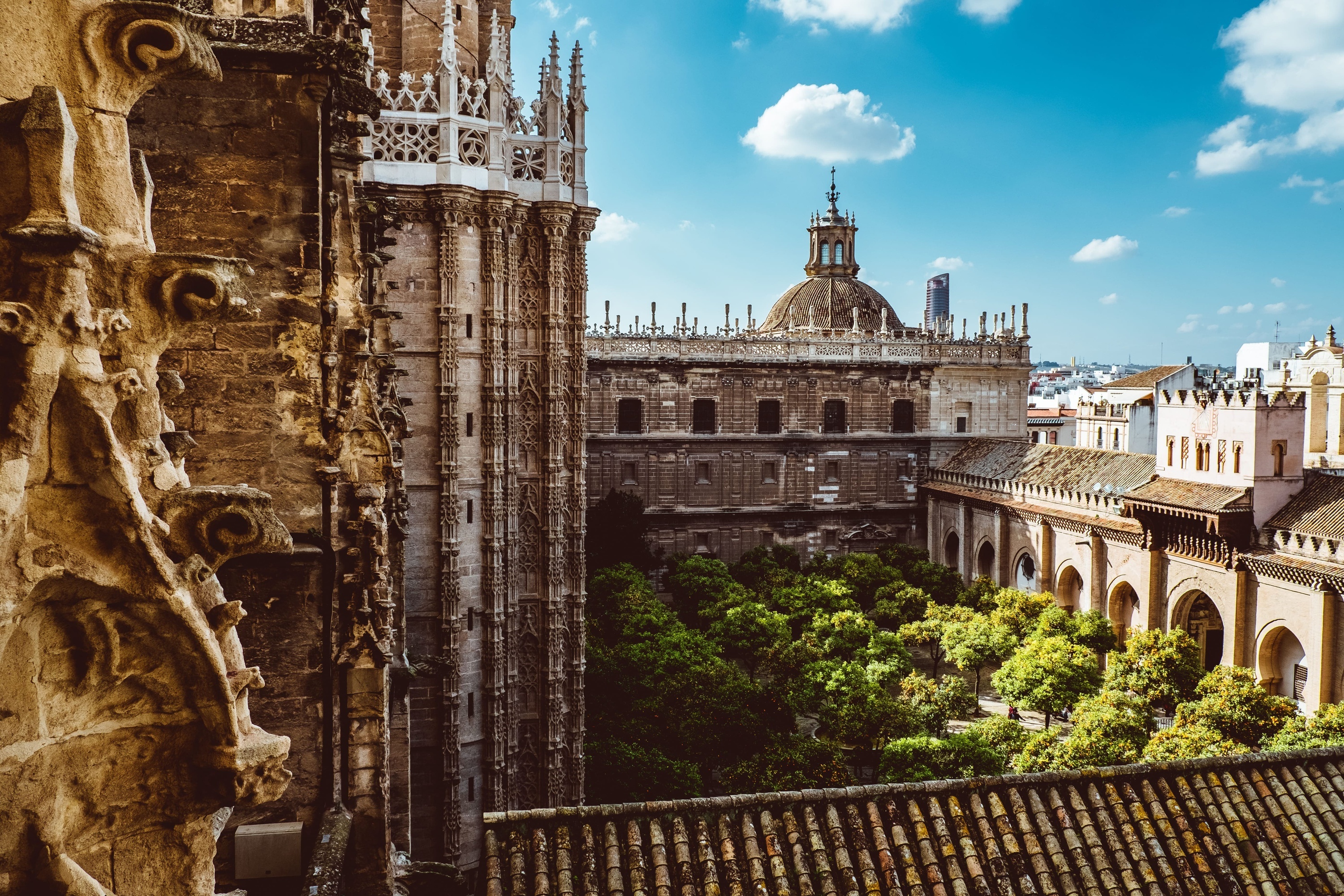
The best places to go for tapas in Seville
Tapas in Seville and more
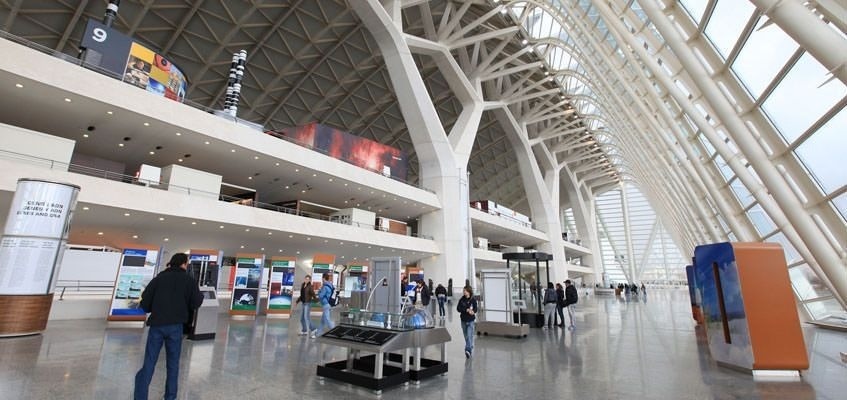
Madrid in autumn with children
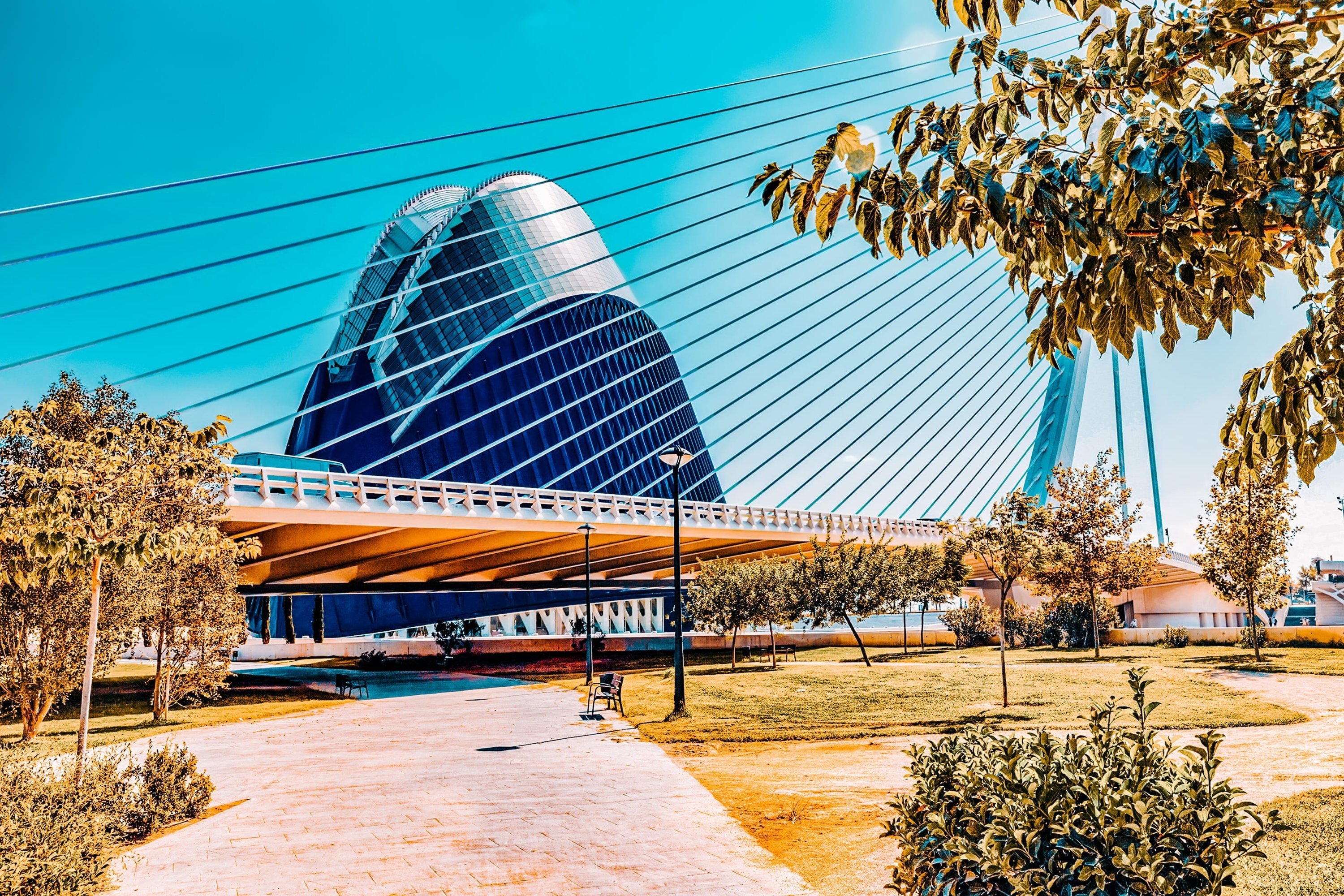
Activities for children in Madrid
Traveling as a family is sharing experiences
- disconnect from stress and daily routine
- allows you to rediscover yourself and others
- you meet other realities and live an unforgettable experience.